Showing posts with label Hot Talks. Show all posts

Sunday, July 3, 2016

Malaysia Market is Inflation or Deflation ? - Part 2

Deflation is a general decline in prices, often caused by a reduction in the supply of money or credit. Deflation can be caused also by a decrease in government, personal or investment spending. The opposite of inflation, deflation has the side effect of increased unemployment since there is a lower level of demand in the economy, which can lead to an economic depression. Central banks attempt to stop severe deflation, along with severe inflation, in an attempt to keep the excessive drop in prices to a minimum. The decline in prices of assets, is often known as Asset Deflation


Saturday, July 2, 2016

Malaysia Market is Inflation or Deflation ? - Part 1

Inflation is defined as a sustained increase in the general level of prices for goods and services. It is measured as an annual percentage increase. As inflation rises, every dollar you own buys a smaller percentage of a good or service.

The value of a dollar does not stay constant when there is inflation. The value of a dollar is observed in terms of purchasing power, which is the real, tangible goods that money can buy. When inflation goes up, there is a decline in the purchasing power of money. For example, if the inflation rate is 2% annually, then theoretically a $1 pack of gum will cost $1.02 in a year. After inflation, your dollar can't buy the same goods it could beforehand.


Saturday, July 11, 2015

China market stable and rebound can last how long?

Analysts at Brown Brothers Harriman explained that China’s recent actions to stabilize equity markets became increasingly desperate.  

Key Quotes:

"More and more measures were rolled out as the week progressed and losses mounted, but the equity markets finally stabilized going into the weekend. However, nearly half the mainland stocks are still locked up and unable to trade. "

"As such, we cannot yet sound the all clear.  China’s heavy-handed meddling in the local equity markets may ultimately derail its bid to have A-shares included in MSCI’s indices."

Greek banks reopen by the end of next week ?

Greek banks are expected to reopen by the end of next week if institutions approve Greek bailout proposal on Sunday, according to a senior banking source via Reuters.

Greek banks have remaining liquidity of approximately €750 million that will last until Monday night, with ATM outflows averaging about € 80-100 million a day.

Even if a deal between Greece and its creditors is finally reached, Greek banks will still need recapitalization of around €10-14 billion.

Meanwhile, Greece’s brand new finance minister Euclid Tsakalotos stated that Greek capital controls can be quickly reversed. 

Friday, July 10, 2015

Greece bailout !

“The bigger event this weekend for the Eurozone & global financial markets would be the Greece bailout ultimatum which could be decided by this Sunday (12 Jul). The Greek government led by PM Alexis Tsipras has submitted the detailed reform proposals in exchange for a three-year bailout loan of at least EUR53.5 billion and reports said that the latest Greek bailout reform plan (which included pension savings and tax increases) is broadly similar to the one proposed by the international creditors on 26 June 2015, giving hope that a compromise can be reached.”

The latest plan was submitted less than 2 hours before the Thursday (9 Jul) midnight deadline and will be presented to the Greek Parliament later today (10 Jul). The Eurozone finance ministers can meet on Saturday (11 Jul) to review the [expected] Greek proposals for a new bailout loan before the 28 EU leaders summit in Brussels on Sunday (12 Jul) that could sign off on a new bailout deal for Greece.”

Looking ahead, we have the key employment report from Canada while Fed Chair Yellen’s speech later tonight will also be closely watched.

Monday, June 29, 2015

Asian shares hit by Greece fears


Asian shares have tumbled and the euro has slid after Greece failed to strike a deal with its creditors at the weekend and imposed capital controls.
The euro fell below $1.10 at one point, from around $1.1165 on Friday.
In Japan, the Nikkei 225 share index closed down 2.88% at 20,109.95, while shares in China also fell.
In a day of volatile trade, the Shanghai Composite was down 2.5% at 4,091.04 by mid-afternoon, having fallen by 7% at one point.
In Hong Kong, the Hang Seng index was down 2.16% at 26,092.65.
China's shares fell despite a surprise rate cut by the central bank on Saturday.
In Australia, the benchmark S&P/ASX 200 closed down 2.23% at 5,422.50, while in South Korea, the benchmark Kospi ended 1.4% lower at 2,060.49 - its biggest daily percentage fall since late May.
Greece risks default and moving closer to a possible exit from the 19-member eurozone.
The country is due to make a €1.6bn payment to the IMF on Tuesday - the same day that its current bailout expires.
Last week, talks between Greece and the eurozone countries over bailout terms ended without an agreement, and Prime Minister Alexis Tsipras then called for a referendum on the issue to be held on 5 July.
At the weekend, the Greek government confirmed that banks would be closed all week, after a decision by the European Central Bank not to extend emergency funding.
Economist Daniel Martin from Capital Economics told the BBC the current situation was "the closest Greece had come to exiting the eurozone" and that it was likely to be a bad week for Asian markets.
Greek banks are expected to stay shut until 7 July, two days after Greece's planned referendum on the terms it had been offered by international creditors for receiving fresh bailout money.

China rate cut

Investors will be watching shares closely in China this week after the rate cut
On Saturday, China's central bank cut its one-year lending rate by 25 basis points to 4.85%. It is the bank's fourth cut since November. It also lowered the amount of cash that some banks must hold as reserves by 50 basis points.
Analysts said the moves highlighted Beijing's concerns that money was not flowing to some of the most-needed sectors in the economy. Others said the bank had reacted to Friday's share plunge, which saw the Shanghai Composite close down more than 7%.
Chinese investment holding company, Legend Holdings, made its trading debut in Hong Kong after raising more than $1.9bn in its initial share offering. The firm has a wide range of interests including in IT, agriculture and real estate, and is the parent company of Lenovo.

Japan numbers

In Japan, official figures showed retail sales grew by 1.7% in May from a month earlier - the fastest rate of growth since September last year.
However, other figures showed Japan's industrial production fell by 4% in May from a year earlier.
"The plunge in industrial production in May points to a contraction in GDP (gross domestic product) this quarter," said economist Marcel Thieliant from Capital Economics.
"[This] corroborates our view that the Bank of Japan will have to step up the pace of easing before too long."

Source : BBC News - ‎Monday‎, ‎June‎ ‎29‎, ‎2015

Thursday, March 5, 2015

Euro Slides to 11-Year Low Before ECB; China Stocks Slip


Breaking News : Likes our Facebook page and join us as members, you will receive email updates and instant updates in Telegram group.

Asian stocks slipped on Thursday after Wall Street continued to pull back from record highs ahead of Friday's closely-watched U.S. jobs data, while the nervous euro languished at an 11-year low prior to the European Central Bank's policy meeting.
MSCI's broadest index of Asia-Pacific shares outside Japan .MIAPJ0000PUS shed 0.4 percent with Thai, Malaysian and Chinese stocks posting losses.
Still, optimism stemming from widespread monetary easing supported the region's other stock markets.
Japan's Nikkei .N225 edged up 0.2 percent and South Korea's Kospi .KS11 was up 0.2 percent.
"Foreigners are continuing their buying spree on the back of increased global liquidity after quantitative easing by the ECB," said Lee Kyung-min, economist at Daishin Securities Co in Seoul.
In line with such gains spreadbetters forecast a slightly higher open for Britain's FTSE.FTSE, Germany's DAX .GDAXI and France's CAC .FCHI.
Risk asset markets, shored up by liquidity provided by easing-minded central banks around the world, will have a chance to confirm the ECB's easing stance when it holds a policy meeting later in the session.
The ECB, which starts its quantitative easing (QE), or bond-buying, program of more than 1 trillion euros this month, is expected to detail the plan after the meeting.
Edgy before the ECB's announcement on details of its QE scheme, the euro fell as far as $1.1055 EUR=, a low not seen since September 2003.
"This (ECB 1 trillion euro program) would not be so euro negative if the Federal Reserve were doing the same thing but not only did the U.S. central bank end its QE last October, but they are looking to take the next step and raise interest rates," said Kathy Lien, managing director for forex strategy at BK Asset Management.
"It is the reminder of this divergence that has driven EUR/USD to fresh 11-year lows."
The euro's weakness helped the dollar index .DXY rise to a new 11-year high of 96.114. Expectations that the Fed would raise rates as early as summer have fueled the dollar's recent rally. The global markets will look to Friday's U.S. jobs data for further confirmation that the world's largest economy is recovering enough to justify a rate hike. Economists polled by Reuters projected U.S. payrolls grew 240,000 in February, following growth of 257,000 in January. ECONUS
The dollar rose 0.2 percent to 119.855 yen JPY, still some distance from a three-week peak of 120.27 struck earlier in the week thanks to a spike in U.S. Treasury yields. The 10-year Treasury note yield US10YT=RR was at 2.117 percent after edging up to a two-week high of 2.142 percent overnight. The Australian dollar received a slight lift when the Reserve Bank of Australia's deputy governor said the currency was much closer to an appropriate level than it has been for the past few years.
In commodities, U.S. crude oil CLc1 added to overnight gains, rising 0.4 percent to $51.73 a barrel, and Brent gained 0.1 percent to $60.59 a barrel LCOc1. The lack of a deal in talks over Iran's nuclear program allayed fears of an imminent rise in oil supply from the OPEC nation, supporting oil.
The euro held declines against most major peers as the ECB prepares to buy 60 billion euros of assets a month to counter slowing growth and the threat of deflation. Norway’s krone slid 0.5 percent, heading for a sixth straight drop, its longest losing streak since July.
German factory orders unexpectedly contracted in January from a year before, data today showed, while a similar gauge from the U.S. is due. Services growth in the euro area fell short of analysts’ estimates last month, in contrast to strong U.S. data, reports showed yesterday.
New Zealand’s dollar slipped 0.7 percent to 75.37 U.S. cents, while Australia’s currency was little changed at 78.09 U.S. cents. A stronger Aussie and lower interest rates than the economy would normally warrant are unavoidable in an environment of international policy easing, central bank Deputy Governor Philip Lowe said. The Aussie was up 0.1 percent at $0.7825 AUD=D4. The currency hit a six-year nadir of $0.7627 early in February after the RBA cut interest rates to a record-low 2.25 percent. The RBA stood pat on policy earlier this week, but observers expect it to cut rates again sooner or later.

Sunday, February 22, 2015

Oil price falls again and 'could hit $10 a barrel'


Breaking News : Likes our Facebook page and join us as members, you will receive email updates and instant updates in Telegram group.


At about $50 a barrel, crude oil prices are down by more than half from their June 2014 crest of $107. They may fall all the more, maybe even as low as $10 to $20. Here's the reason.
U.S. economic growth has arrived at the midpoint of 2.3 percent a year since the recuperation began in mid-2009. That is about a large portion of the rate you may expect in a bounce back from the deepest subsidence since the 1930s. In the interim, development in China is moderating, is negligible in the euro zone and is negative in Japan. Toss in the expansive increment in U.S. vehicle gas mileage and other conservation measures and its acceptable why worldwide oil interest is feeble and may even decay.
A. Gary Shilling argues that a combination of factors will push the oil price down again.
The first is the diminishing power of the Opec cartel. In Shilling's view, Saudi Arabia has experienced market-share losses in the past, due to the "cheating" of fellow cartel members, who have exceeded their agreed output quotes.
Consequently, Saudi Arabia has embarked on a "game of chicken" with the cheaters, believing that it can withstand low prices for longer than its financially weaker competitors. The latest figures suggest that Saudi oil production has now increased to 10m barrels per day, and data out later today is expected to show that US oil output is also on the increase.
"According to the American Petroleum Institute, US crude stocks rose by 14.3m barrels last week, far more than analysts had expected, The Guardian reports. "Markets are waiting for official figures from the US Energy Information Administration, out at 16.00 GMT. If they confirm the large build-up in inventories, it would be the biggest weekly increase since data started in 1982.

Some analysts had predicted that the falling oil price would act as a brake on production, especially in the US, where extraction costs are higher. What is the cost at which significant makers back down and cut output? Whatever that cost is, it is much lower than the $125 a barrel Venezuela needs to backing its blundered economy. The same strives for Ecuador, Algeria, Nigeria, Iraq, Iran and Angola. Saudi Arabia obliges a cost of more than $90 to reserve its financial plan. At the same time it has $726 billion in remote cash saves and is wagering it can make due at two years with costs of not exactly $40 a barrel.

Besides, the cost when makers back down isn't fundamentally the normal expense of creation, which for 80 percent of new U.S. shale oil generation not long from now will be $50 to $69 a barrel, as per Daniel Yergin of energy consultant IHS Cambridge Energy Research Associates. Rather, the back down point is the minor expense of creation, or the extra expenses after the wells are bored and the channels are laid. An alternate approach to consider it: It's the cost at which income for an extra barrel tumbles to zero.
According to research by the energy research organisation Wood Mackenzie, only 1.6 percent of the 2,222 oil fields they surveyed around the world are likely to have negative cash flow at $40 a barrel. Consequently, Shilling says that the marginal cost for both US shale-oil producers and oil producers in the Persian Gulf "is about $10 to $20 a barrel".

Finally, as supply continues to rise, Shilling notes that global demand is receding. The International Energy Agency has been slashing its forecasts for global oil demand growth for months, the International Business Times reports. The agency's 2015 global demand forecast now sits at 93.3 million barrels a day, while supply is likely to exceed this demand by 400,000 barrels a day. 

A top oil analyst has warned that oil prices are likely to fall further this year before they recover, with West Texas Intermediate crude possibly falling below $40 a barrel in the second quarter of the year. Tom Kloza, chief oil analyst at Oil Price Information Service, told CNBC that the "cycle has a long way to run out", adding that the spread between Brent and WTI could widen to about $10.
Despite the fact that the 40 percent decrease in U.S. fuel prices since April 2014 has driven buyers to purchase more gas-guzzling SUVs and pick-up trucks, purchasers amid the recent years have purchased the most productive mix of autos and trucks ever. In the meantime, moderating development in China and the shift far from vitality escalated made fares and base to buyer administrations is discouraging oil request. China represented 66% of the development popular for oil in the previous decade.

Saturday, February 21, 2015

Greece wins eurozone bailout deal with strict conditions


Breaking News : Likes our Facebook page and join us as members, you will receive email updates and instant updates in Telegram group.

Euro-area finance ministers reached an accord that would keep bailout funds flowing to Greece in return for a commitment to meet certain conditions, buying time to work out the detail of longer-term Greek financing.Talks in Brussels between officials from the 19 euro-area finance officials concluded Friday evening with an agreement to extend aid to Greece for four months. The 19 eurozone finance ministers reached the hard-won deal at tense talks pitting Greece against an angry Germany, suspicious that the new radical leftist government in Athens was looking to ditch its austerity obligations.
"The meeting was intense because it was about building trust between us," said Eurogroup head Jeroen Dijsselbloem, after the talks ended with a two-page statement setting out the tough conditions Athens will have to fulfil.
“We agreed on four months under conditions,” Joerg Schelling told reporters after the meeting. Greece must submit a list on Monday of measures it will undertake in return and “the institutions check whether the list is sufficient,” he said.
In exchange for the extension, Greece agreed it will submit a list of economic and other reforms by Monday which its eurozone partners will then review to see if they go far enough.
On Tuesday, they will report back to Greece and decide whether to proceed with Friday's agreement, with the chance that the compromise be scrapped if officials are left unsatisfied.
Greek Finance Minister Yanis Varoufakis said the deal marked a new era for Athens and its relationship with the European Union, after two painful bailouts put together at the height of the debt crisis to save the euro. Breakthrough in the standoff between Greece and its creditors eases the immediate risk of Prime Minister Alexis Tsipras’s government running out of cash as early as next month. It might also go some way to help repair the ties between Greece and Germany, the biggest European contributor to Greece’s 240 billion-euro ($274 billion) twin bailouts and the chief proponent of economic reforms in return.
U.S. stocks rose and the euro advanced with European equity futures amid optimism over the prospects for an accord.
Greek Finance Minister Yanis Varoufakis said the deal marked a new era for Athens and its relationship with the European Union, after two painful bailouts put together at the height of the debt crisis to save the euro.
Athens claimed the rescues and the austerity measures it had to follow since its first 2010 bailout had wrecked the Greek economy, making it impossible to manage its mountain of debt.
"Today was a pivotal moment because Greece for five years now has been lonely, isolated in the Eurogroup. Today that isolation has broken," Varoufakis said.
However, he warned: "If the list of reforms is not agreed, this agreement is dead."
Markets reacted positively to the deal, with the Dow and S&P 500 surging to fresh records on Wall Street as fears of a catastrophic exit by Greece from the euro receded. With distrust for Greece widespread among ministers, it was a lengthy phone call between Greek Prime Minister Alexis Tsipras and German Chancellor Angela Merkel late Thursday which appeared to make Friday's breakthrough possible.
European officials said the stand-off had come down to a clash of personalities with Schaeuble furious at the negotiating style of the casual Varoufakis, who, in a change, remained markedly sombre on Friday. Analysts in Athens are already describing the concessions made by the Greek government as "politically poisonous." 
Any reforms will have to be endorsed by the Greek parliament. 
The talk of an apparent breakthrough has helped the euro rally and U.S. stock markets to turn positive. The Greek government was effectively just a week away from having to fend for itself, as its debt deal with the EU expires Feb. 28. Friday's emergency Eurogroup meeting, which included International Monetary Fund managing director Christine Lagarde and European Central Bank president Mario Draghi, is the third in just over a week. Financial markets have been gripped by the precarious negotiations. 
"It has been a laborious but eventually constructive process," Lagarde said after the meeting.
Without any further support, Greece faced defaulting on its debts and an exit from the euro, a scenario that would likely devastate the Greek economy, at least in the short-term, and generate renewed uncertainty for the global economy.

Tuesday, February 17, 2015

Greek financing talks separate in the midst of profound divisions over bailout


Breaking News : Likes our Facebook page and join us as members, you will receive email updates and instant updates in Telegram group.

Negotiations over how to keep Greece afloat broke down abruptly Monday, demonstrating a wide gulf between Athens and its European creditors and triggering a new, heightened state of uncertainty about the country’s future inside the currency bloc. The breakdown in talks among eurozone finance ministers leaves Greece and its lenders dashing to achieve another financing arrangement for the obliged nation before its current bailout arrangement terminates. The ministers cancelled the arranging session simply a couple of hours after it started, saying Greece left them little any desire for securing an understanding. The ministers, in turn, presented the new left-wing government in Athens with an ultimatum: Agree to an extension of the current €240 billion ($272 billion) bailout by the end of the week or lose the lifeline of rescue loans that have sustained Greece for nearly five years.
A crucial meeting of eurozone finance ministers over the future of Greece’s bailout broke down in acrimony after Athens angrily rejected the bloc’s insistence that it agree to complete its current €172bn rescue as “absurd” and “unacceptable”.
It is the second time in five days that negotiations between the new anti-austerity Greek government and its eurozone creditors have collapsed and it means Athens, whose public finances are deteriorating fast, could soon be left with no European financial backstop. The eurozone gave Athens until Wednesday night to switch course and look for an augmentation of the current project, which is because of terminate toward the end of one week from now.

Greek Prime Minister Alexis Tsipras and his finance minister, Yanis Varoufakis, oppose the terms of the rescue deal from the eurozone and the International Monetary Fund, saying they are hurting its economy and society.
“It’s not a bluff, because it’s the only option we have,” Mr. Varoufakis said of his government’s position after the meeting. “It’s plan A, there is no plan B.”
In the event that the bailout closes as planned on February 28, the Greek government will lose access to the last €7.2 billion cut of its present bailout, conceivably abandoning it not able to make obligation reimbursements approaching in March. That could, in the most pessimistic scenario, trigger a progression of occasions that would compel Greece out of the eurozone.
“The general feeling [among ministers] is still that the best way forward would be for the Greek authorities to seek an extension of the current program,” said Jeroen Dijsselbloem, the Dutch minister who presides over the regular meetings with his counterparts. “We simply need more time,” he added.

Greek officials have said the government could continue striving for a while, however there are questions. To what extent it takes depends, all things considered, on Greek citizens. The banks have as of now seen cash being withdrawn and progressively require national bank advances. In the event that there is no bailout program, the European Central Bank could pull the fitting on the banks. On the off chance that it went to that, it truly would mean a major monetary emergency, with maybe the burden of far reaching budgetary controls to prop up the banks and potentially even the re-presentation of a national money. It's tricky to nail down a date by which an understanding must be carried out to turn away a monetary Armageddon, on the grounds that it relies on upon the activities of citizens, bank clients and the ECB. Be that as it may time is getting short.

Wednesday, February 4, 2015

Obama 2016 budget urges U.S. states to cut emissions faster


Breaking News : Likes our Facebook page and join us as members, you will receive email updates and instant updates in Telegram group.

President Barack Obama's fiscal 2016 budget proposes boosting funding for clean energy by 7 percent and a new $4 billion fund to encourage U.S. states to make faster and deeper cuts to emissions from power plants, officials said Monday. Obama's budget also calls for the permanent extension of the Production Tax Credit, used by the wind industry, and the Investment Tax Credit, used by the solar industry, the officials said.

President Obama's fiscal 2016 budget introduces a one-time 14 percent tax on approximately $2 trillion of so-called unrepatriated foreign earnings. President Obama’s fiscal year 2016 budget introduces a one-time 14 percent tax on approximately $2 trillion of so-called unrepatriated foreign earnings. The tax would raise about $248 billion over the next five years, which would be used to help pay for infrastructure projects and replenish the Highway Trust Fund.

The proposal would also impose a 19 percent tax on future foreign earnings (with an 85 percent credit for any foreign taxes paid), allowing such earnings to then be brought back to the United States with no additional tax due. Under current law, multinational corporations based in the United States are nominally taxed at a 35 percent rate on worldwide income. But the tax does not have to be paid on earnings by a controlled foreign corporation until the company pays a dividend to its United States parent. So the tax can be (and often is) deferred indefinitely by keeping the earnings abroad.

Companies like Microsoft, Apple, Google and Pfizer have stockpiled hundreds of billions of dollars abroad in the hopes of bringing it home later at a reduced tax rate. Such earnings are often referred to as trapped foreign earnings. The tax bill they would have to pay to bring those earnings to the United States is leading some companies to reinvest the money abroad, even if they get a lower pretax return on investment. Companies often prefer leaving it overseas over paying the tax and returning the money to shareholders or reinvesting at home.

This foreign earnings “lock-out” effect is conceptually similar to the “lock-in” effect of a high capital gains rate on individual investors. If the tax rate on capital gains is too high, individual investors may hold on to appreciated assets rather than sell them, particularly if enticed by the possibility that their heirs would be able to avoid the tax when they inherit the assets. In the State of the Union address in January, President Obama coupled his proposed increase in the capital gains rate with a proposal to make death a taxable event for wealthy households, precisely to offset this concern about lock-in of previously untaxed assets.

The White House proposal on foreign earnings takes a similar approach, taxing foreign earnings up front and eliminating deferral. Taxing the old “trapped” foreign earnings at a 14 percent rate allows multinationals to repatriate the money and return it to shareholders via a dividend or redemption. On the other hand organizations can decide to reinvest the trusts in the United States. There would be no confinements on what an organization could do with the repatriated cash, not at all like some "expense occasion" recommendations that would make an effort not to utilize repatriated trusts to pay profits or reclamations. Going ahead, the 19 percent charge on outside profit turns into a kind of multinational corporate least assessment. Albeit entirely household enterprises would confront a 28 percent assessment rate (25 percent for assembling partnerships), multinationals would pay 28 percent on residential profit and 19 percent on outside income (with generally a 85 percent credit for remote assessments paid).

Obama has made fighting climate change a top priority in his final two years in office. The White House sees it as critical to his legacy. The interest in clean vitality advances would cover programs essentially at the divisions of Energy and Defense, the authorities said.  The $7.4 billion figure is an increment from the $6.9 billion proposed in Obama's monetary 2015 financial plan, an ascent of 7.2 percent, and over the $6.5 billion established by Congress during the current year. 

The organization is finishing questionable decides that will cut carbon dioxide outflows from force plants across the nation. The new reserve would give states motivators to rush that process or go more remote than their ordered cuts. The proposed $4 billion fund would be available to any state that applies, Janet McCabe, acting assistant Environmental Protection Agency Administrator in charge of air regulations, told reporters.

"What we will be looking for are states that will get (carbon emission) reductions earlier... or seek to go further than final guidelines require," she said.

States would have access to money that could be used to finance clean energy technologies, funding for low-income communities that face "disproportionate impacts from environmental pollution" and create incentives for businesses to back projects that cut down on emissions, blamed for global warming.

In addition, the budget provides $400 million to help communities assess flood risks. It also spells out the costs to the federal government of climate-related disasters, highlighting a fiscal argument to fight global warming. The United States has taken on over $300 billion in direct costs resulting from extreme weather and fire in the past decade, the budget says. The EPA's proposals to slash carbon and other air pollution from power plants and oil and gas facilities are a target of some lawmakers.

Senate Majority Leader Mitch McConnell of coal-producing state Kentucky said Monday he will join the Senate committee that oversees the EPA's budget.

"You can guarantee that I will continue to fight back against this administration’s anti-coal jobs regulations on behalf of the Kentuckians I represent in the U.S. Senate," he said.
Acting EPA Deputy Administrator Stan Meiburg said the agency is already working with limited resources, including a "historically low" staffing level.

"This has made us focus on being more efficient... with the staff we have," he told reporters.The Department of Energy requested $29.9 billion for fiscal year 2016, an increase of $2.5 billion from the amount enacted for 2015, of which $10.7 billion would be spent to support scientific research, development and deployment of new clean energy technologies and advanced manufacturing.

Energy Secretary Ernest Moniz said Monday the department's budget request highlights new investments in energy infrastructure technology to make the electric grid more resilient and reduce methane emissions from natural gas systems. To support the international component of Obama's climate strategy, the budget requests $500 million to support the United Nations' Green Climate Fund, the first tranche of the $3 billion pledged by the United States in November to help poor countries deal with climate change. Under present law, the 35 percent impose on repatriated profit coupled with inconclusive deferral urges American multinationals to move wage seaward, keep it seaward and for all time reinvest the income seaward. Some lawmakers have said they plan to block the funding.

Thursday, January 29, 2015

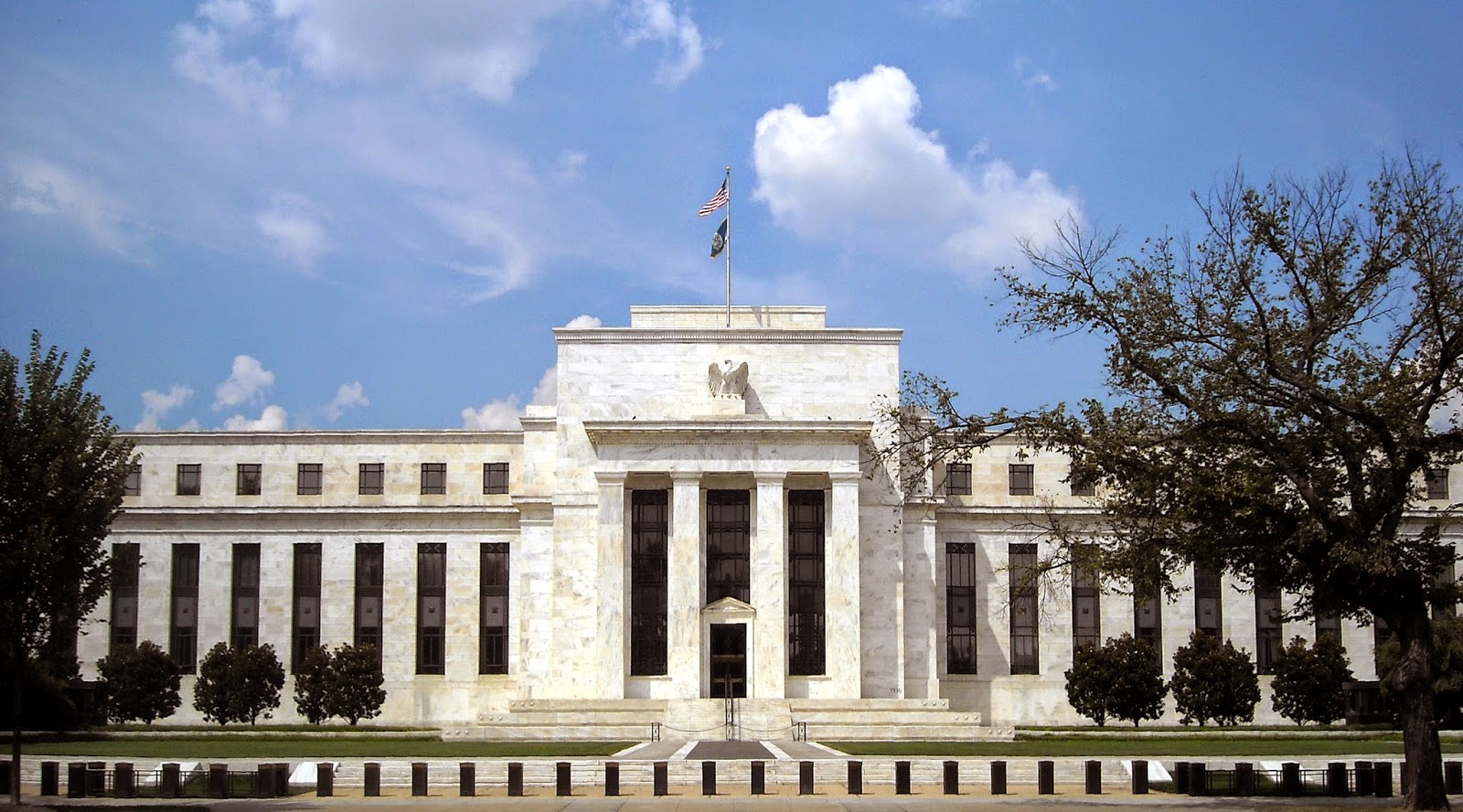
Good news from US Federal Reserve

Breaking News : Likes our Facebook page and join us as members, you will receive email updates and instant updates in Telegram group.


Economists will get a glimpse into the overall health of the U.S. economy Wednesday, as the U.S. Federal Reserve prepares to release a statement following the Federal Open Market Committee's first two-day policy meeting of the year. Market professionals will analyze the statement, looking for clues as to when the central bank plans to raise interest rates and how deflationary concerns and the dramatic decline in oil prices could alter the Fed’s monetary policy decisions in 2015.
The Federal Reserve kept its options open on Wednesday, signaling that it would not raise short-term interest rates any earlier than June, while leaving unresolved how much longer it might be willing to wait before lifting its benchmark rate from near zero, where the central bank has held it for more than six years.
Treating the recent turmoil in markets as essentially meaningless noise, the Fed issued its most upbeat assessment of economic conditions since the recession, after its first policy-making meeting of the year, in a statement that noted solid economic growth and strong job growth. Oil prices slumped anew, with US crude futures hitting a near six-year lows after government data showed record-high inventories in the United States. US crude futures stood at $44.50, having sunk to as low as $44.08 on Wednesday, their lowest since April 2009.
But the optimistic tone was tempered by the Fed’s acknowledgment that inflation has slowed markedly in recent months and is likely to slow even more, making it harder for the Fed to determine how quickly to retreat from its stimulus campaign.
Fed officials for more than a year have pointed to the summer of 2015 as the likely time for the central bank to increase its benchmark interest rate, but investors are increasingly convinced that the sluggish pace of inflation will force the Fed to wait until fall at the earliest.
Asian shares retreated on Thursday after the Federal Reserve unexpectedly lifted its view on the economy, signalling that the US central bank remains firmly on track with plans to raise interest rates this year. 

The Fed said falling energy prices boosted household purchasing power, even as it acknowledged a decline in certain inflation measures and added international developments would be taken into consideration. 

"The markets were a bit surprised that the Fed was more hawkish than expected, especially considering that many people had thought that the board members this year would be more dovish than last year's," said Hideyuki Ishiguro, senior strategist at Okasan Securities. 

Four voting members from regional Feds at the policy committee this year are considered less hawkish than last year's rotating members.  A greater likelihood of higher US interest rates this year helped Asian stock indexes follow Wall Street into negative territory. Japan's Nikkei slipped 0.7 per cent and MSCI's broadest index of Asia-Pacific shares outside Japan dropped 0.4 per cent. The Dow Jones industrial average fell 1.1 per cent to a six-week low while the S&P 500 lost 1.4 per cent. 

The Fed's optimism and unwavering stance on future rate hikes contrasted with a recent spate of dovish policy shifts at many central banks around the world - from Europe to Canada to India. That helped the US dollar recoup some losses this week, with the dollar index against a basket of major currencies gaining 0.6 per cent to 94.627. The euro slipped to $1.1284 from a high of $1.1423 hit on Tuesday, with signs of tension in Greek financial markets adding to downward pressure. Greek short-term bond yields hit their highest since the country's 2012 debt restructuring and Greek shares tumbled 9 per cent to a 2 1/2-year low on Wednesday as the new government in Athens appeared to be squaring up for a fight with international creditors. 

The New Zealand dollar tumbled to a 3-1/2-year low on Thursday after the Reserve Bank of New Zealand dropped its tightening bias on official interest rates, instead signalling that the next move could be either up or down. 

Against the yen, the dollar was little changed at 117.51 yen as weakness in share prices helped to support the safe-haven Japanese currency. 

As share prices eased, US bond yields have fallen, with the 30-year yield hitting a record low of 2.273 per cent on Wednesday. The 10-year yield stood at 1.726 per cent, near this month's low of 1.698 per cent, which was its lowest level since May 2013. But US interest rate futures hardly budged. The Fed repeated it will be "patient in beginning to normalize" rates, although it dropped a reference that rates will be held at the current levels "for a considerable time" -- which many traders had taken to mean about six months. 

Wednesday, January 28, 2015

Malaysia is recognized as country still attracting foreign investment


Breaking News : Likes our Facebook page and join us as members, you will receive email updates and instant updates in Telegram group.


Malaysia is still able to attract foreign investments amid the current global economic uncertainty, says Malaysian International Chamber of Commerce and Industry (Micci) president Simon Whitelaw.

He said there was still huge untapped business potential in Malaysia in addition to spacious growth opportunities for small and medium enterprises (SMEs) in the country.
"Business players should not be alarmed, but instead be more productive and efficient in cushioning the impact of the current economic downturn," he said.

Whitelaw said there was also a need to get SMEs to be more involved, for example in developing exports.

He added that at present, SMEs contributed just under 70% of Malaysia's exports.
He told reporters this after the official launch of the National Corporate Ethics Awards (NCEA) 2015 today.

He said cost-wise, although China and India were seen as more competitive, Malaysia was still seeing foreign companies setting up businesses in the country.

Tax incentives for principal hubs and projects that invest in innovation, technology, involving the creation of high-income jobs, have been introduced to accelerate the momentum in attracting high-value investments.

Malaysia only have five years left to achieve Vision 2020. More and more multi-national companies (MNCs) have supply chains spanning across various jurisdictions. Increasingly, MNCs are opting to set up a Principal Hub to house senior executives and decision-makers that will drive and manage their global supply chains.

These tax incentives will help in attracting MNCs to house their high-value functions and operations in Malaysia. This will bring numerous economic benefits, amongst others:
(1) creating high-income jobs,
(2) potentially influencing them to consider Malaysia as their first choice to source any support required for their global operations,
(3) helping stimulate ancillary services, such as logistics, banking services, etc.

The potential multiplier benefits to the economy are aplenty. Budget 2015 also introduced a 200% capital allowance on automation expenditure to encourage automation, especially for labour-intensive industries.

"So, lets not be too negative," Whitelaw said.

The NCEA 2015 is a private sector-led initiative designed to identify companies who can serve as role models while stimulating a proactive anti-bribery role and ethics in the private sector.

As Malaysia's economy continues to reap the benefits of international partnerships, local property development firms are creating opportunities across the country for overseas investors. "Malaysia's property sector continues to attract foreign investors, and still has significant growth potential," says Datuk Syed Mohamed Bin Syed Ibrahim, president and CEO of Iskandar Investment Berhad. The company has played a key role in creating Iskandar Malaysia, a development region in Johor state that lies on Singapore's opposite shore across the Strait of Johor. Iskandar is a mix of brownfield and greenfield developments covering an area of around 2,200 square kilometers, three times the size of Singapore.

Datuk Syed Mohamed's role as CEO includes the strategic planning and development with federal and state agencies, global partners and other key stakeholders of a number of crucial and "catalyzing" projects that have contributed towards Iskandar Malaysia's ongoing growth.

He says that Iskandar Investment Berhad's mission is to imbed within Iskandar Malaysia strategic projects to turn almost 2,300 square kilometer development area into a world-class city by 2025. "This involves tapping into the Malaysian government's National Key Economic Areas (NKEA) and adopting several incentivized clusters such as infrastructure development, tourism and leisure, education, healthcare and wellness, and the creative industries to drive population and business growth. Iskandar Investment has also created Edu-City?, a broad multi-campus community that has attracted the attention of some of the most renowned foreign universities from Australia, the United Kingdom, and the Netherlands; we also welcome Chinese universities to be part of this ambitious program."
Iskandar is flanked by five ports, three in Malaysia and two in Singapore, and is close to two airports, one in Malaysia and the other in Singapore. It also sits between two major highway bridges linking Malaysia and Singapore.

Monday, January 26, 2015

Plunging Oil Prices, Rising Debt Leaves Asia Staring at Deflation: Morgan Stanley


Breaking News : Likes our Facebook page and join us as members, you will receive email updates and instant updates in Telegram group.

Asia’s rapid accumulation of debt in recent years is holding back central banks from easing monetary policy to fight the risk of deflation, endangering private investment needed to boost faltering growth, according to Morgan Stanley. Debt to gross domestic product ratio in the region excluding Japan rose to 203 percent in 2013 from 147 percent in 2007, with most of the increase led by companies, analysts led by Chetan Ahya in Hong Kong wrote in a report today. The ratio is close to or has exceeded 200 percent in seven of 10 nations including China and South Korea, they said.
Deflation risk is spreading from Europe to Asia as oil prices plunge, raising the specter of companies and consumers postponing spending and threatening a recovery in the global economy. Asia could take its cue from the U.S. where a policy of keeping real rates low after the 2008-2009 global financial crisis encouraged private-sector investment and boosted productive growth, Morgan Stanley said.
“When real rates are high, only the public sector or government-linked companies will take on leverage,” the Morgan Stanley economists wrote in the report. The key concern with an approach of keeping real rates at elevated levels is that the private sector will continue to be hesitant to take up new investment, which is critical for reviving productivity, the report said.
Asia’s policy makers are balancing the need to support domestic demand and curbing debt and asset bubbles. While China cut its one-year lending rate in November, its policy makers have held off on broader easing measures as they sought to avoid exacerbating a build-up in nonperforming loans.
Leverage in the region picked up sharply from 147 percent of GDP in 2007 to 203 percent of GDP in 2013. Seven out of ten economies in the region now have debt to GDP ratios close to or above 200 percent (only India, Indonesia and Philippines have ratios well below 200 percent), a level that warrants close monitoring in our view. Deflation: The weak domestic demand growth and issues related to growth mix have meant that the region continues to face entrenched disinflation pressures. In the context of a high debt stock almost all across the region, the rising deflation risks have compounded the challenges of debt management by pushing down nominal GDP growth and pushing up real rates
Oil prices that were over $100 in July 2014 are currently trading at around $48. According to a report byBloomberg, the deflation risk is spreading from Europe to Asia. The risk is reportedly raising concerns about companies and consumers postponing their expenditure. Such a scenario may make the global economic recovery difficult. The central banks in Asia are reportedly finding it difficult to follow an easy monetary policy. The report cites an analysis by Morgan Stanley that says companies in Asia have accumulated a lot of debt over the past few years. The huge debt may be stopping central banks in the region to take steps to contain deflationary risks in their respective economies.
 India, South Korea, Indonesia, Thailand and the Philippines have reportedly kept the interest rates unchanged in the last month. China has cut its lending rate, but the country is reportedly holding back from taking more monetary measures for fear of increasing non-performing assets of banks. Most Asian countries are major importers of oil. The fall in the commodity's price in the past few months is expected to push prices down in the region. But slow economic growth and deflationary risks are a cause for concern for investors. The Asian Development Bank has reportedly cut the growth forecast for the region for 2014 and 2015.
With oil slumping, Singapore’s consumer prices fell in November from a year earlier for the first time since 2009, while price gains in Thailand eased to the slowest pace in December in more than five years. To allay concerns on leverage, China could tighten rules to allow faster recognition of non-performing debt in the corporate sector, Morgan Stanley said. While this could lead to a period of sharper slowdown in credit and GDP growth, it will reduce risks and open up the door for aggressive monetary as well as fiscal easing, it said.

Friday, January 23, 2015

Malaysian Palm Oil Price weakens on technical selling


Breaking News : Likes our Facebook page and join us as members, you will receive email updates and instant updates in Telegram group.


Malaysian palm oil futures fell to their lowest in over a week on Friday as volatile crude oil prices and lacklustre export demand dampened buying interest in the tropical oil, dragging the contract to its biggest weekly drop in seven. Palm, the world's most traded vegetable oil, has been propped up by monsoon flooding, which dented output and stockpiles in No.2 grower Malaysia, but traders remain wary as global commodity markets are roiled by an oil price rout.

The ringgit's decline to its weakest since April 2009 was not enough to limit losses in time, traders said.  "Although the ringgit is weak, the market could not keep up. After prices broke 2,300 ringgit, heavy liquidation and the stop-loss order were triggered," said one trader with a foreign commodities firm in Kuala Lumpur. "The ringgit depreciating and floods will bring down output and end-stocks, but you have problems in the world. Demand is not picking up," said a trader with a foreign commodities firm in Kuala Lumpur. The benchmark April contract was down 1.4 percent to 2,311 ringgit ($650) per tonne to close at their lowest since Jan. 7. It fell 1.6 percent this week, its biggest drop since end-November, after failing to build on three straight weeks of gains. Traded volume stood at 78,450 lots of 25 tonnes, more than double the typical 35,000 lots.   

Market participants say palm has struggled over the past two weeks to get a firm grip above 2,380 ringgit, as concern over dwindling demand from key buyers chased away follow-through buying. The contract hit a six-month high of 2,394 ringgit late on Thursday but dropped as low as 2,298 ringgit on Friday.Cargo surveyors reported that overseas sales of Malaysian palm products fell between 12 and 13 percent in the first half of January compared to December.  

Analysts say flooding in Sarawak, Malaysia's second-largest palm producing state, may not be as damaging to output as initially feared, when thunderstorms and rain triggered flash floods across some plantations.   

"Many areas in Sarawak remain flooded following heavy continuous rainfall over the last three days," said Affin Hwang Capital Research in a note on Wednesday. 

"However, as yet, the operations of the timber and plantation companies have not been seriously affected by the floods." The seasonal downturn in output which typically occurs around October-to-March will "only be exacerbated by the disruptions in collection, transport and processing caused by the lingering effects of the flooding," the bureau said in report.  "Reportedly, in some areas, it may take up to two-to-three months to repair damaged infrastructure."

The benchmark April contract was down 2.0 percent to 2,273 ringgit ($629) per tonne by Wednesday's close, with prices touching 2,270 ringgit, their lowest since Jan. 5. Traded volume was at 66,335 lots of 25 tonnes, nearly double the usual average of 35,000 lots. The Malaysian ringgit hit a near six-year low of 3.6250 per dollar as Fitch Ratings warned of a downgrade to the country's rating, following government moves to cut its 2015 growth forecast, trim spending and widen its fiscal deficit target. The slump in the ringgit also stoked worries over a gloomy global economic outlook that could hurt commodity prices, including palm oil, the world's most traded vegetable oil.
Elsewhere, Indonesian crude palm oil output is estimated to have fallen around 6 percent in December from November, hit by a seasonal downturn in production, a Reuters survey of leading industry officials showed. Growers in Malaysia's Borneo region are bracing for the impact of monsoon rains that have triggered flooding in some parts of top palm-growing state Sabah. Malaysia's meteorological department flashed "orange stage" warnings on its website late on Thursday for heavy rain over Sarawak until Jan. 17. 

In other markets, Brent crude oil futures rose above $49 a barrel on Friday as the IEA said the tide of recent price slumps may turn, although analysts said a strong rebound anytime soon was unlikely as global output continues to outweigh demand. In competing vegetable oil markets, the U.S. soyoil contract for March was nearly flat in late Asian trade, while the most active May soybean oil contract on the Dalian Commodity Exchange eased 0.1 percent.